The Modern SEO Playbook: How to Win in Google and AI Search




Search has fundamentally changed.
You've heard it before, but I'll say it again.
Ranking number one on Google is no longer the main goal of SEO. Today's visibility landscape includes Google's AI Overviews, AI Mode, ChatGPT, Perplexity, YouTube, and even platforms like TikTok and Reddit. These AI platforms and tools increasingly deliver answers directly, often without sending users to websites at all.
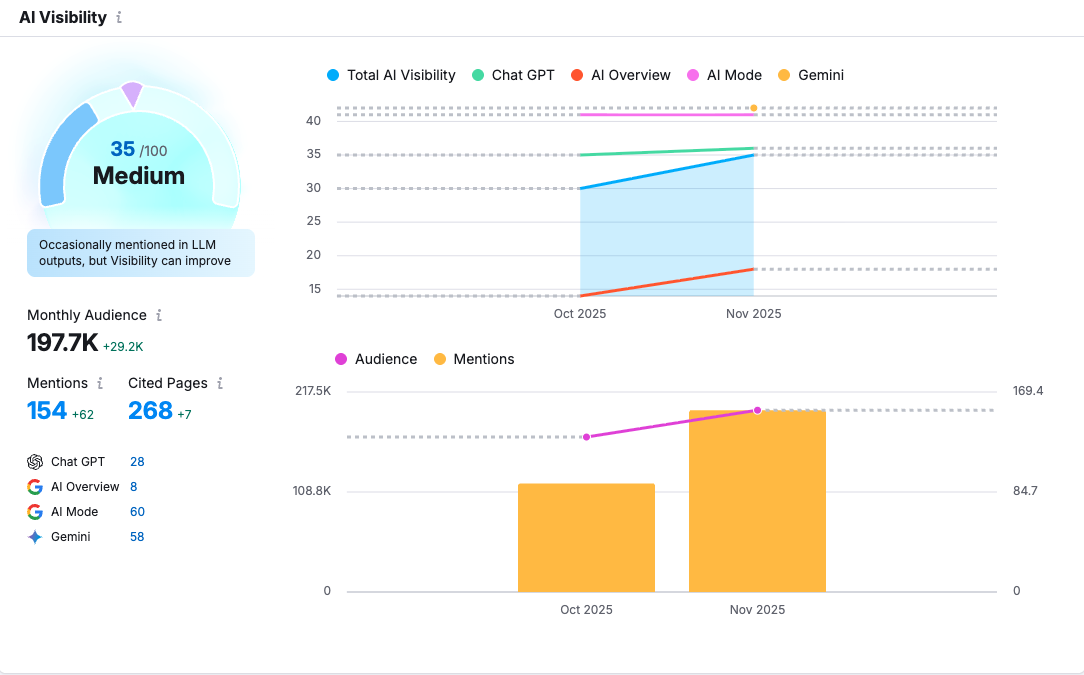
That's right. You could spend days crafting an optimised service-page or article only for AI to scrape your content, repackage it alongside other sources (usually your competitors) and deliver the answer.
To remain competitive, SEO strategies don't need to be completely reinvented - but they need to evolve. This article outlines a simple four-step framework for achieving consistent visibility across both traditional search engines and AI-powered search tools.
Step 1: Understand the New Search Landscape
With around 90% of global search engine market share and 8.5 billion searches everyday, Google is still the most dominant search engine. But the experience users encounter today is highly fragmented.
Within Google alone, there are now multiple surfaces competing for attention:
- Traditional organic search results
- Local Pack results
- AI Overviews
- Google AI Mode
Each of these products behaves differently, displays information differently, and requires nuanced strategies.
AI Overviews and AI Mode are already reducing organic click-through rates for many queries. In some cases, users receive complete answers without ever visiting a website.
Enter the era of zero click searches.
Search Is No Longer Centralised
Beyond Google, users increasingly search across multiple platforms depending on intent:
- ChatGPT, Gemini and Perplexity for explanations and comparisons
- YouTube for demonstrations and how-to content
- TikTok and Reddit for experiential and community driven answers and conversations
Modern SEO is no longer about optimising for a single algorithm. It's about maximising brand visibility wherever people search.
A future-proof strategy must account for every meaningful search platform, not just traditional rankings.
Step 2: Modernise Your Keyword Strategy for AI Search
Keywords still matter, but how they are discovered and used has changed.
AI platforms do not rely solely on static keyword matching. Instead, they use query fan-out and retrieval-augmented generation (RAG) to assemble answers. That's just a fancy way to say that tools like ChatGPT predict…
How AI Platforms Generate Responses
When an AI system such as ChatGPT or Perplexity lacks a reliable answer from its training data, it performs retrieval. In most cases, this retrieval process relies on:
- Public search engines
- High-authority websites
- Reddit threads
- YouTube transcripts
This has an important implication:
If your website doesn't already rank well in traditional search engines, you are unlikely to hold much sway in AI generated answers.
Traditional SEO acts as your foundation for discoverability, even in the new AI search environment.
How to Identify AI-Relevant Queries
There are four practical methods for uncovering the types of queries users enter into AI platforms.
1. Synthetic Queries (Use With Caution)
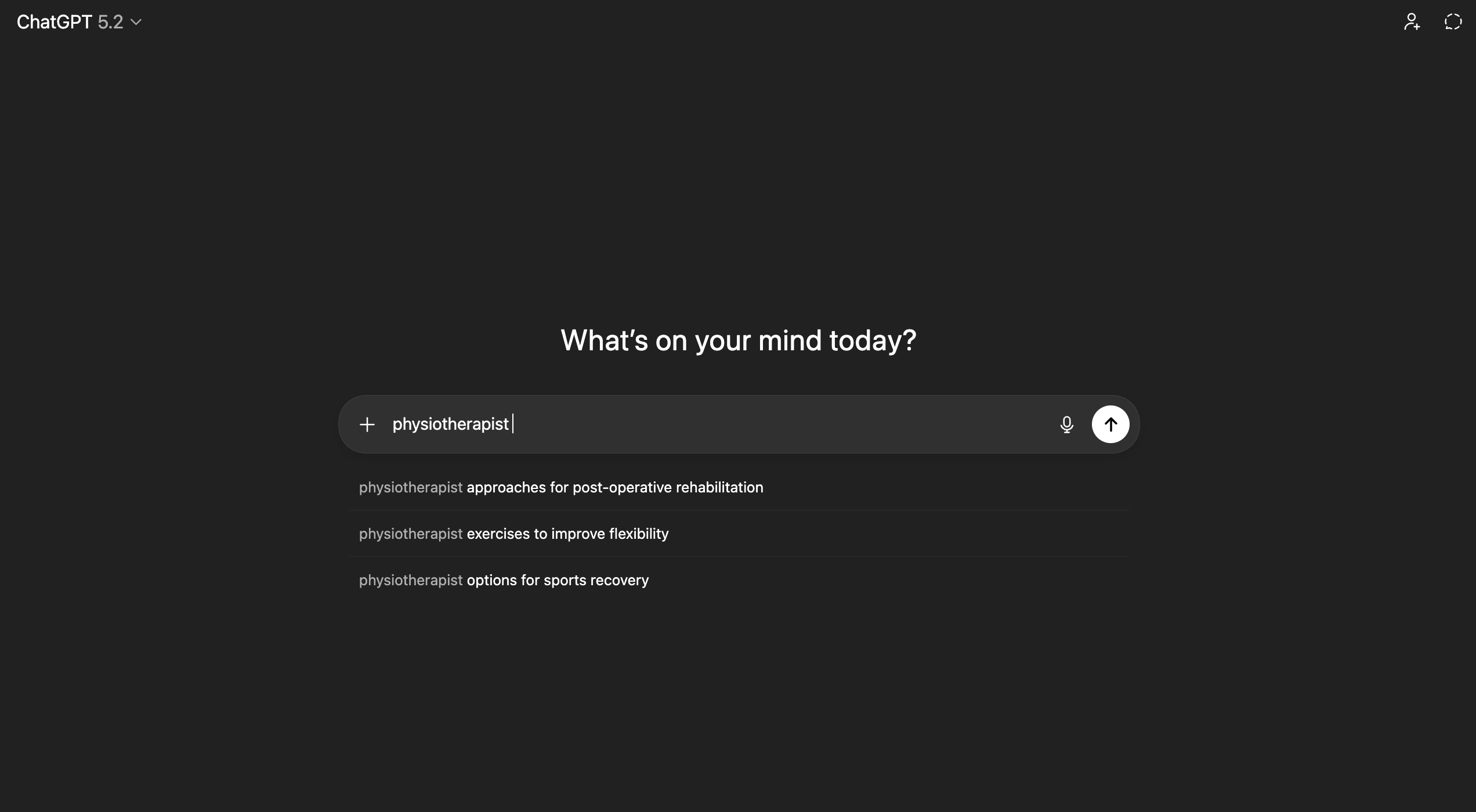
You can prompt your favourite AI tool to generate potential user queries. While fast, this method relies on AI assumptions and lacks evidence of real-world usage. It shouldn't be your primary approach, but it can act as a starting point for brainstorming.
2. Perplexity Query Fan-Out
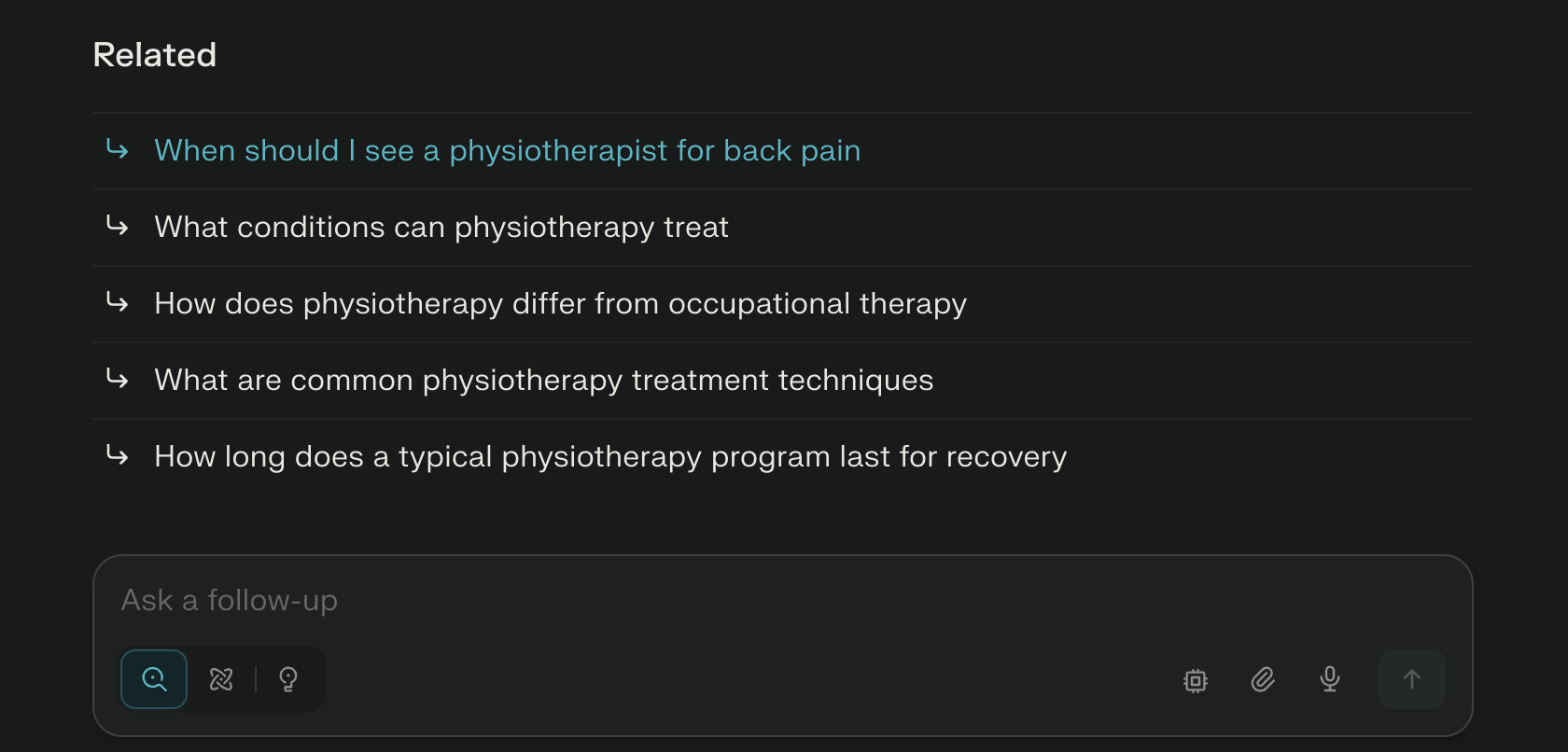
Enter potential customers queries in Perplexity and observe:
- The expanded queries generated during fan-out
- Related questions shown within the interface
These reflect real query structures AI systems actively process and are a great way to start building out a map of relevant topics to cover on your website.
3. Google "People Also Ask" Mining
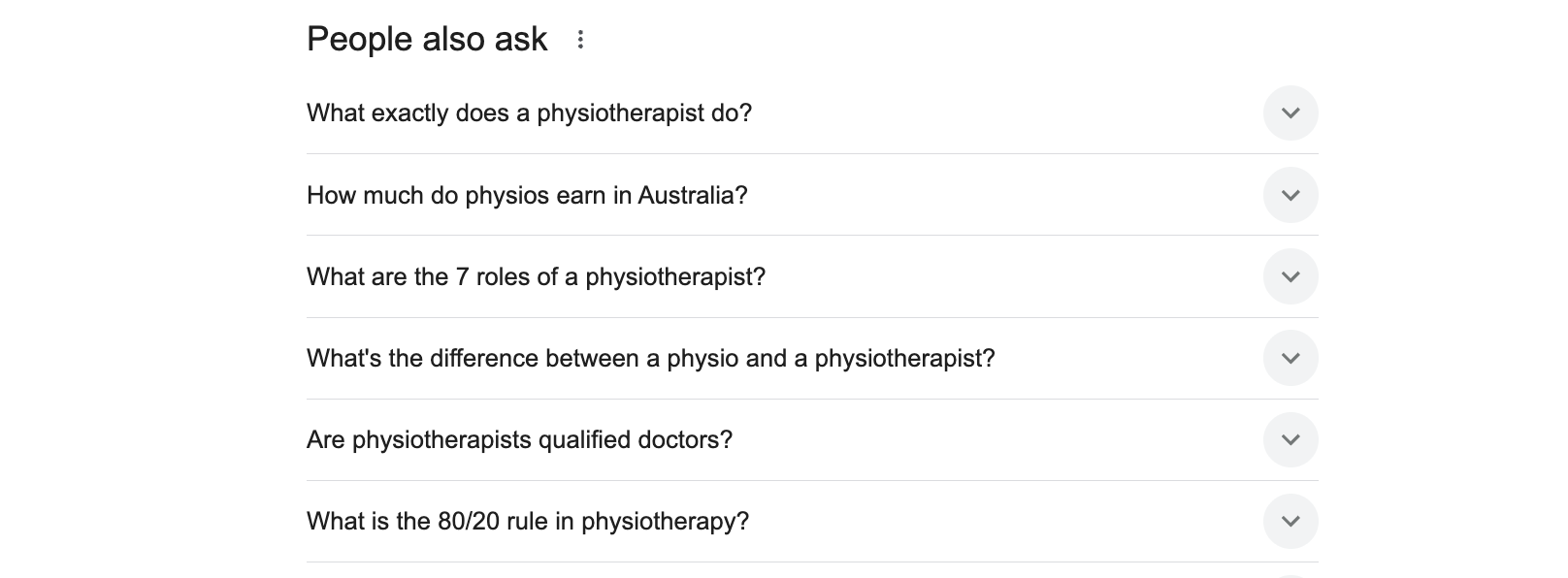
Old school, but effective. Run the same queries in Google and extract "People Also Ask" questions. These queries mirror how users naturally phrase questions across platforms.
Repeat this process for 10–20 seed keywords to build a reliable list of questions and topics to cover.
4. Google Search Console Filtering
Google Search Console is one of the most under-utilised AI-search tools.
Export queries and then in your favourite spreadsheet editing software, filter for queries:
- Longer than 10 words
- With commercial or command-based intent
You can identify strong signals that users are interacting with AI-driven search experiences such as Google AI Mode.
Step 3: Achieve Topical Authority
Once opportunities are identified, the objective is not to create a single “perfect” page.
The objective is to build topical authority by systematically answering the questions your audience is actively asking.
What topical authority means
Topical authority is about depth, not breadth.
Rather than publishing thin content across many topics, you focus intensely on a single product or service area and comprehensively cover every relevant angle, including:
- Core service explanations
- Supporting sub-topics
- Commercial intent queries
- Informational and problem-led questions
Over time, this depth signals expertise and trust to both search engines and AI systems, increasing the likelihood your brand is referenced, ranked and cited.
For example:
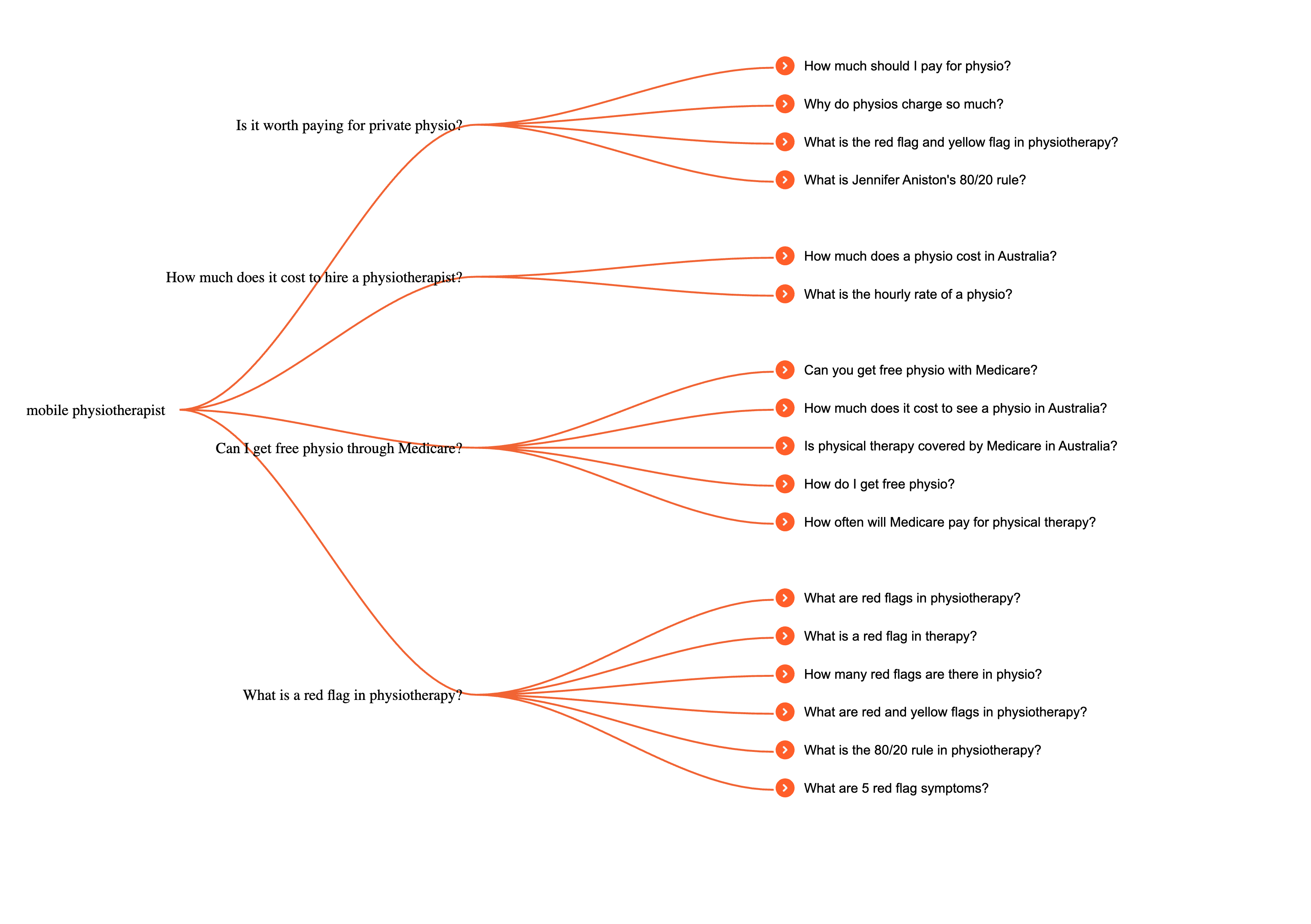
"Mobile physiotherapist East Fremantle"
This single service can support literally hundreds of content assets, including:
- Core service pages
- Sub-service pages
- Cost guides
- Comparison pages
- Explainer videos
- Articles on conditions
Start With Your Website (Your foundation)
Your website remains the foundation of your authority.
Create or optimise your primary commercial page first. Use content optimisation tools to:
- Structure content around real query data
- Ensure topical coverage
- Incorporate social proof and trust elements such as review, testimonials, guarantees, and unique selling propositions
Creating the structure of your page using AI tools can speed up the process, but human writing and insights is crucial. There's enough AI slop out there. Your customers and Google increasingly reward content that is original, easy to understand, and genuinely useful, not content that merely exists for the sake of it.
Build Authority With Supporting Commercial Pages and Useful Articles
Many businesses assume topical authority is built primarily through informational blog content. In practice, commercial service pages often carry greater relevance and impact, particularly for high-intent searches.
A practical way to identify these opportunities is through Google Search Console:
- Start with a broad seed term (for example, "mobile physiotherapist")
- Review related queries generating impressions
- Convert those queries into:
- Localised service pages, or
- Supporting articles, FAQs and guides
Each sub-topic forms its own mini content cluster.
Some queries will naturally belong within your core commercial pages, strengthening their depth and relevance. Others are better handled as standalone articles or FAQs that support the main service.
Only move on to a new topic once the current one has been fully exhausted.
Expand Beyond Your Website
Once you're confident you've covered a topic well on your website, now it's time to distribute that content across platforms that AI systems trust and regularly retrieve from.
YouTube
YouTube is a Google property and a major retrieval source for AI platforms. Keep in mind that AI tools consume video transcripts, not video pages
This means scripts must be optimised with the same discipline as written SEO content.
Well-structured, keyword-optimised transcripts can rank on both YouTube and Google simultaneously.
LinkedIn is exceptionally powerful for search visibility due to:
- Extremely high domain authority
- Frequent citations within AI tools
Optimised LinkedIn videos and posts, especially those with strong transcripts, can rank quickly and reinforce brand authority across platforms.
Step 4: Send Strong Signals to Algorithms and AI Tools
Visibility is ultimately driven by "signals".
To be selected, cited, and trusted by AI tools, your brand must consistently demonstrate authority. There are three main ways that you can signal your brand’s authority to these tools.
1. Website Authority and Citation Building
AI platforms frequently cite websites that:
- Rank well in traditional search
- Have strong backlink profiles
This isn't because AI tools directly use algorithms like PageRank, but because:
- They rely on search engines for retrieval
- Search engines still rely heavily on backlinks
- Trusted domain lists often overlap with high-authority sites
Acquiring high-quality back links is still important, if not more important in this new era of search.
2. AI-Informed Link Prospecting
One of the most effective modern techniques involves using AI tools themselves to identify link opportunities.
By running commercial queries in ChatGPT or Perplexity and reviewing citation sources, you can identify:
- Publications
- Directories
- Review sites
- Blogs
These sources already influence AI-generated answers. Identify the platforms most relevant to your brand and assess how your business can be represented on them.
This could involve:
- Reaching out to site owners or editors
- Creating or optimising a business profile
- Contributing verified information, listings or content
- Ensuring your brand details are accurate, consistent and authoritative
The goal here is influence and visibility within AI answers, not traditional link metrics alone.
3. Third-Party Reviews
For local businesses, reviews are a dominant trust signal. I recommend spending 90% of your focus on Google Business Profile and the remaining 10% distributed across other platforms cited by AI tools.
Common examples include industry directories and review platforms.
4. Brand Mentions and Recommendations
Finally, pursue brand mentions wherever AI systems source information.
Any platform cited by AI tools acts as an LLM feeder. These include:
- Reddit threads
- Industry publications
- Local magazines
- Community forums
Being consistently mentioned in these environments strengthens brand recognition and increases selection likelihood within AI-generated responses.
Final Thoughts: SEO is now about being found everywhere
Modern SEO is no longer a single-channel discipline.
It is the practice of:
- Appearing wherever customers search
- Influencing how AI systems retrieve and generate answers
- Reinforcing trust signals across the web
Brands that embrace this shift will not just survive declining website traffic and click-through rates. They will dominate visibility in an AI-driven search landscape.