
Google Ads vs Meta Ads: Key differences, ROI & which is best for your business




Choosing between Google Ads and Meta Ads is one of the most common decisions marketing managers and business leaders face when planning paid media.

This guide explains the key differences between Google Ads and Meta Ads, how each advertising platform works, and when each is the better option depending on your business goals. If you are responsible for growth, performance or budget allocation, this article will help you choose the right platform, or the right mix of both.
What are Google Ads and Meta Ads?
Google Ads (formerly Google AdWords) is Google’s advertising platform that allows businesses to place ads across Google Search, YouTube, Gmail and the Google Display Network. It is built primarily around intent, matching ads to what people are actively searching for.
Meta Ads is the paid advertising platform used across Facebook and Instagram, Messenger and the Meta Audience Network. It is designed to help businesses reach audiences based on interests, behaviours and demographics rather than search intent.
At a high level, these ads are two very different approaches within digital marketing. Google Ads captures demand that already exists. Meta Ads helps create and shape demand earlier in the journey.
What are the key differences between Google Ads and Meta Ads?
The biggest difference between Google Ads and Meta Ads is intent.
Google Ads shows ads when users actively search Google for a product or service. This makes it highly effective for bottom-of-funnel activity, where users are ready to compare options or convert.
Meta Ads places ads into feeds while users browse Facebook and Instagram. Users are not searching, but ads may introduce them to a business, product or offer they were not previously considering. Meta outlines these discovery-led formats in its Business Help Centre.
These key differences affect everything from ad format to cost per conversion and overall ROI.
How do Google Ads work compared to Meta Ads?
At its core, Google Ads works by matching ads to keywords, content or audiences. A search ad appears when someone types a query into Google. Ads can also appear across YouTube Ads or the Google Display Network depending on campaign setup.
It is worth noting, however, that Google is actively competing with demand-generation platforms such as Meta Ads through the expansion of Performance Max campaigns. Performance Max allows advertisers to run a single, goal-based campaign across all of Google’s inventory, including Search, YouTube, Display, Discover and Shopping, using automation and machine learning to determine where and when ads are shown.
While Performance Max still prioritises conversion goals, its use of visual creative, audience signals and cross-network distribution means it increasingly overlaps with upper-funnel and mid-funnel activity that has traditionally been associated with Meta Ads. In practice, this blurs the line between demand capture and demand generation, particularly for ecommerce and lead-generation advertisers.
Meta
Meta Ads works through audience targeting and optimisation. Advertisers use Meta Ads Manager to define objectives, audiences, creative and placements across Facebook and Instagram. Meta also provides training through Meta Blueprint.
In simple terms, Google Ads works best when people are looking. Meta Ads works best when people are browsing.
Google Ads vs Meta Ads for ROI: which delivers better results?
ROI varies significantly depending on funnel stage, industry and product or service complexity.
Google Ads often delivers strong ROI for high-intent searches, particularly for services with clear demand. According to these B2B benchmarks, Google Ads remains a core acquisition channel when intent is high.
Meta Ads may deliver a lower cost per click, but ROI often takes longer to realise. Meta Ads builds awareness and supports remarketing, which can later improve Google Ads performance through increased branded search (AKA the Halo effect).
There is no universal “best ROI”. The right answer depends on how each platform fits into your broader digital marketing strategy.
Ad format differences: search ads, video ads and visual ads
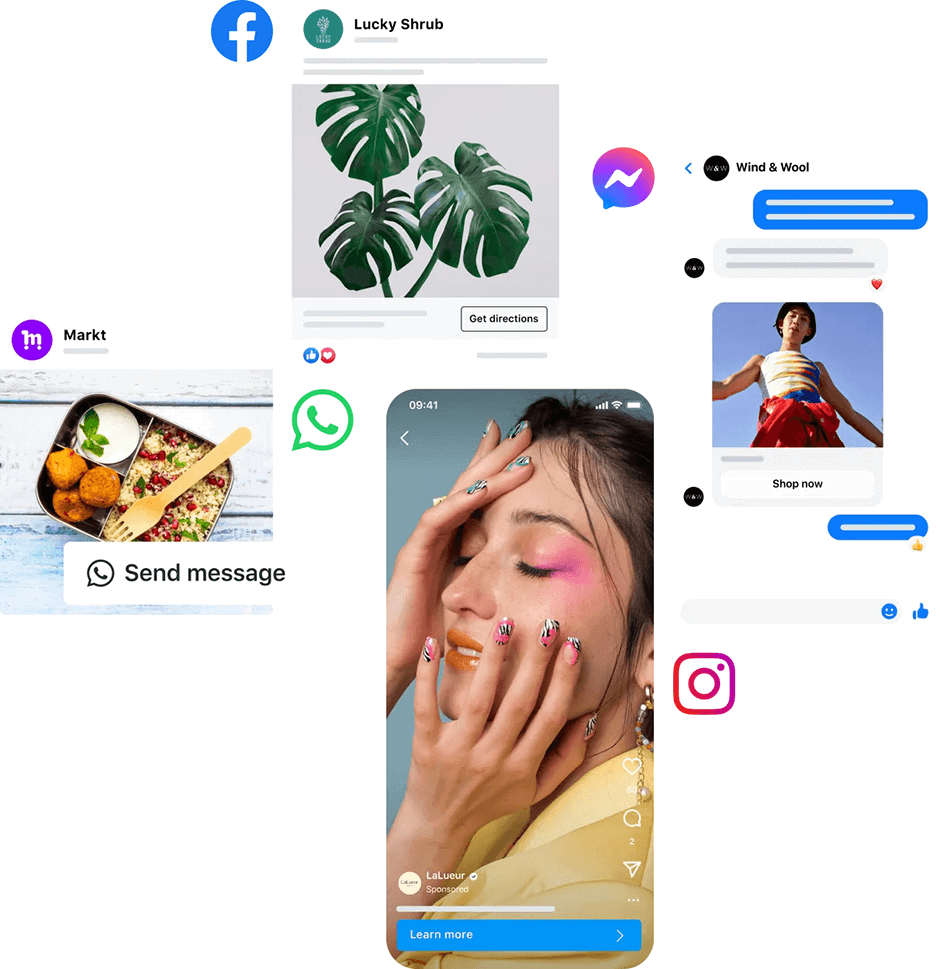
Ad format plays a major role in performance.
Google Ads primarily uses search ads, but also supports display ads, shopping ads and video ads through YouTube. YouTube Ads are particularly effective for reach and consideration. Google discusses AI-driven optimisation across these formats here.
Meta Ads is built around visual ads. These include image ads, carousel ads, stories and video placements across Facebook and Instagram. Creative quality and messaging are advertisers biggest levers when running Meta Ad campaigns.
Google Ads campaign types explained
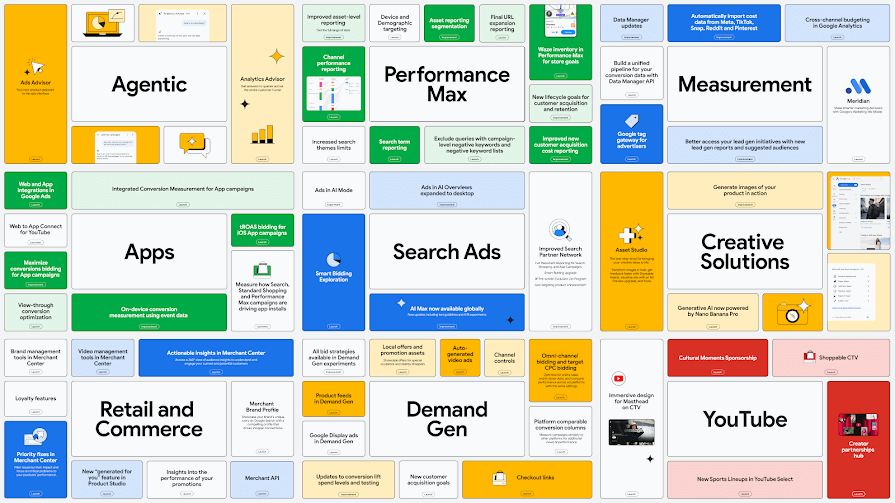
Google Ads campaigns are structured around intent and placement. Common campaign types include:
- Search campaigns
- Display campaigns
- Performance Max
- Shopping campaigns
- YouTube Ads
Each campaign type serves a different role in the funnel.
Choosing the wrong campaign type can reduce efficiency, particularly if automation is not supported by clean conversion data.
Meta Ads campaign structure and targeting
Meta Ads campaigns are built around objectives such as awareness, traffic, leads or conversions. Campaigns rely heavily on creative testing and audience signals.
Meta Ads Manager allows advertisers to manage placements, budgets and bidding strategies across Facebook, Instagram, Messenger and Whatsapp.
Meta Ads tends to reward brands that invest in creative variation, strong offers and ongoing testing.
Brand awareness vs demand capture: where each platform fits
Google Ads is strongest at demand capture. When users search Google, they are often close to making a decision.
Meta Ads is strongest at brand awareness and demand creation. Ads build familiarity and trust over time, which supports later conversion through Google or direct traffic.
This distinction is why many advertisers combine both platforms rather than choosing one exclusively.
Cost per click, cost per conversion and budget considerations
Google Ads often has a higher cost per click, especially in competitive industries. However, conversion intent is usually stronger - meaning that you’ll typically need less clicks to generate a conversion when compared to Meta.
Meta Ads may deliver lower cost per click, but cost per conversion depends on funnel design, landing pages and effectiveness of your offer and USPs.
Ads should not be evaluated on cost alone. Assisted conversions and customer lifetime value (CLV) matter just as much.
Choosing the right platform for your business goals
Choosing the right platform depends on:
- Business goals
- Product or service complexity
- Funnel maturity
- Budget size
- Measurement capability
If your goal is immediate lead generation, Google Ads may be the better option. If your goal is awareness or education, Meta Ads may be more effective.
In many cases, the best approach is not Meta or Google, but Meta and Google working together.
Using Google Ads and Meta Ads together

Omnichannel marketing is back in fashion, and for good reason. Using Google Ads and Meta Ads together often delivers the best results. Meta Ads builds awareness and engagement. Google Ads captures demand when users search.
This integrated approach aligns with how modern buyers research, compare and decide.
Key takeaways
- Google Ads captures demand, Meta Ads creates demand
- Intent and ad format are the biggest differences
- ROI depends on funnel stage, not platform
- Cost per click alone is a poor decision metric
- Using both platforms together is often the strongest approach


